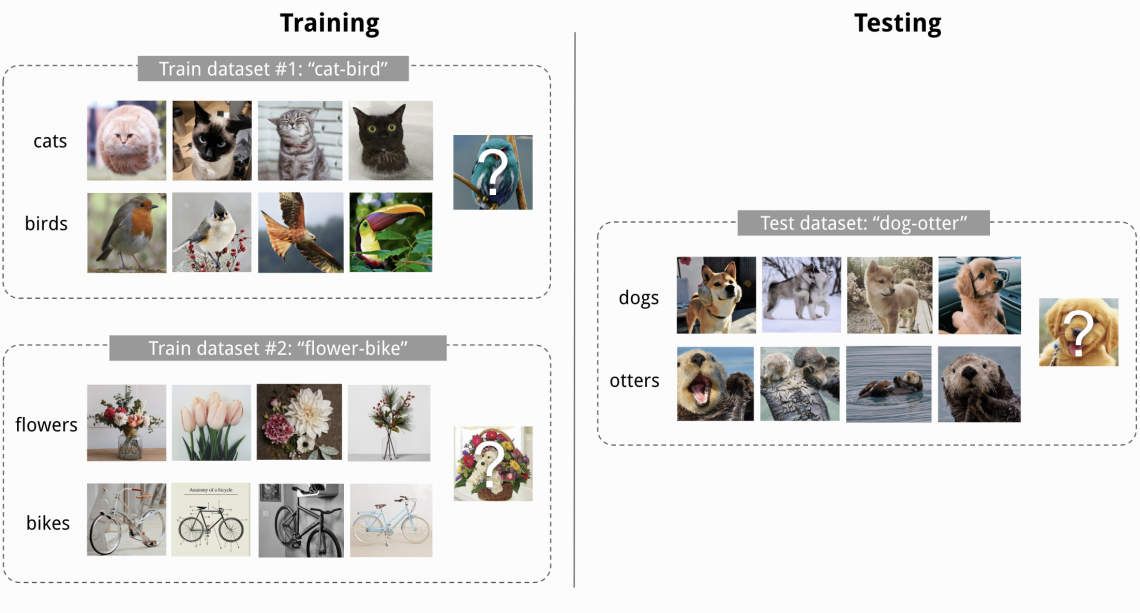
Many machine learning systems perform well only when they have large labelled datasets for a single, well-defined task. In real business settings, that assumption often fails. Teams may need models that can learn a new product category, a new customer segment, or a new defect type with very little data and within tight timelines. This is where meta-learning becomes useful. Meta-learning, often described as “learning to learn,” focuses on training models so they can adapt rapidly to new tasks using only a few examples. For learners in a data science course, meta-learning provides a practical framework for building flexible models that stay useful even when the task or domain shifts.
What Meta-Learning and Few-Shot Learning Mean
Few-shot learning refers to solving a new task with only a small number of labelled examples—sometimes as few as one to five per class. Meta-learning is a broader training approach designed to make few-shot learning possible. Instead of training one model on one dataset, meta-learning trains across a distribution of tasks so the model learns a reusable adaptation strategy.
A simple way to picture it is this: traditional training aims to produce a model that performs well on a fixed task. Meta-learning aims to produce a model that can quickly become good at many related tasks, even when each new task provides only a few labels.
Core Meta-Learning Approaches
Meta-learning strategies generally fall into three categories. Each aims to reduce the amount of task-specific data and training time needed at deployment.
1) Optimisation-based meta-learning
These methods learn initial parameters that can be fine-tuned quickly on a new task. The most well-known example is MAML (Model-Agnostic Meta-Learning). The idea is to train model parameters such that a small number of gradient steps on a small dataset leads to strong performance.
Why it matters: In practice, you can deploy a model that adapts to a new client or new category with only a handful of labelled cases, rather than collecting thousands of examples.
2) Metric-based meta-learning
Metric-based methods learn an embedding space where similar items are close and different items are far apart. Classification can then be done by comparing distances rather than training a full classifier from scratch. Prototypical Networks are a common example: each class is represented by a prototype vector (an average embedding), and new samples are classified by distance to prototypes.
Why it matters: These methods are often simpler and faster at inference. They are useful when you need rapid adaptation without heavy fine-tuning.
3) Model-based meta-learning
Model-based approaches include architectures that can store and retrieve information across tasks, such as memory-augmented networks. More recently, large language models and foundation models are often used in a meta-learning-like way because they can follow instructions and generalise from a few examples provided in context.
Why it matters: This style is attractive when you want a model to switch tasks quickly, sometimes without updating weights, by using contextual examples.
How Meta-Training Works
Meta-learning usually uses an “episode” structure that mimics few-shot deployment:
- Sample a task: For instance, classify product defects for one factory line or detect fraud patterns for one region.
- Split into support and query sets: The support set is the few labelled examples the model can learn from. The query set is used to evaluate adaptation.
- Train across many tasks: The model improves at adapting from support to query across a wide variety of tasks, learning an adaptation strategy rather than memorising one dataset.
This procedure ensures that training conditions resemble real few-shot use cases. It also highlights an important point: meta-learning’s success depends on task similarity. If new tasks are unrelated to the meta-training distribution, adaptation will be weaker.
Where Few-Shot Adaptation Helps in Real Projects
Meta-learning is valuable in settings where labels are expensive, rare, or time-sensitive:
- Customer support routing: Quickly adapt to new issue categories with only a few labelled tickets.
- Medical imaging or diagnostics: Rare conditions produce limited labelled data, yet clinicians need usable models.
- Quality inspection in manufacturing: New defect types appear, and teams cannot wait for large datasets.
- Personalisation: Models adapt to individual users or small segments without retraining from scratch.
These examples connect well with applied learning goals in a data science course in Mumbai, where many learners work with fast-changing business requirements and limited labelled data.
Practical Challenges and Limitations
Meta-learning is not a universal solution. Key issues include:
- Task distribution mismatch: If deployment tasks differ strongly from training tasks, few-shot performance may degrade.
- Evaluation complexity: You must evaluate across many tasks and measure adaptation stability, not just average accuracy.
- Compute and tuning costs: Some methods, especially optimisation-based ones, can be computationally heavy to meta-train.
- Overfitting to meta-training tasks: The model may learn shortcuts that work for the training task family but fail elsewhere.
A good practice is to treat meta-learning as a structured way to handle uncertainty and scarcity, not as a guarantee of instant generalisation.
Conclusion
Meta-learning trains models to adapt quickly to new tasks, making few-shot learning achievable in practical environments where labelled data is limited. By learning across many related tasks, a meta-learned model develops a reusable adaptation strategy—through fast fine-tuning, distance-based reasoning, or memory and context. For professionals and learners in a data science course, these methods offer a disciplined approach to building flexible models. When combined with careful task design and realistic evaluation, meta-learning becomes a strong option for teams seeking rapid, data-efficient deployment, including those pursuing a data science course in Mumbai.
Business name: ExcelR- Data Science, Data Analytics, Business Analytics Course Training Mumbai
Address: 304, 3rd Floor, Pratibha Building. Three Petrol pump, Lal Bahadur Shastri Rd, opposite Manas Tower, Pakhdi, Thane West, Thane, Maharashtra 400602
Phone: 09108238354
Email: enquiry@excelr.com