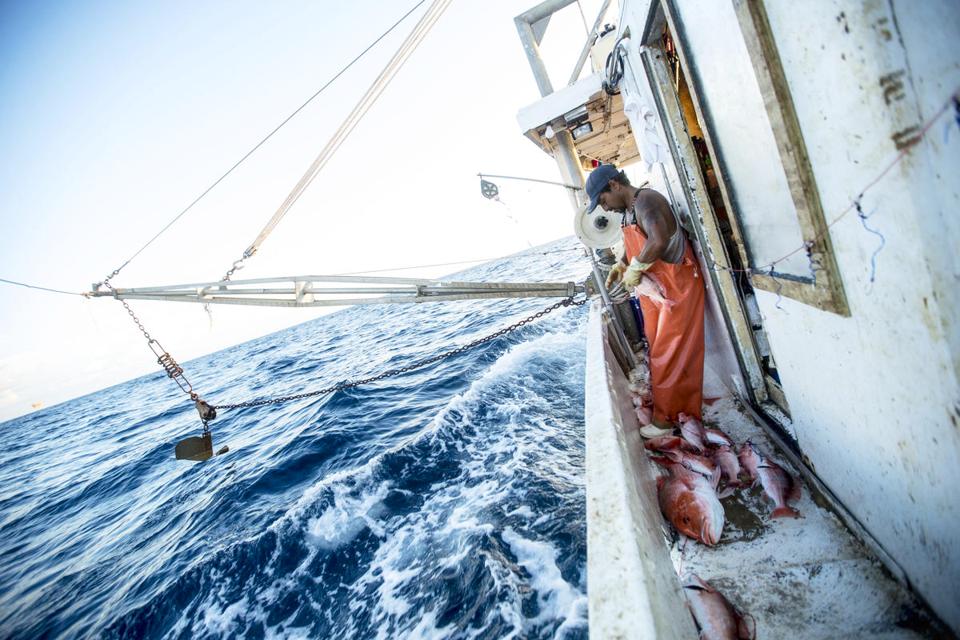
When most people think about commercial fishing, they picture the exciting part. They imagine a boat returning to the dock with a fresh catch, workers unloading shrimp and crabs, and seafood making its way to restaurants and markets. That moment is easy to see, and it tells only a small part of the story.
The reality is that every successful fishing trip is built on hours of work that happen long before the boat leaves the dock and long after it returns. The catch may be the most visible part of the job, but it is supported by planning, maintenance, careful decision-making, and years of experience that most people never witness.
According to the National Oceanic and Atmospheric Administration (NOAA), the U.S. seafood industry supports more than 1.7 million jobs and contributes over $250 billion annually to the nation’s economy. Commercial fishermen play a vital role in that system, but their work extends far beyond simply catching seafood.
Understanding the hidden side of commercial fishing offers valuable lessons not only about the seafood industry but also about preparation, consistency, and problem-solving before they become bigger problems.
Every Trip Begins Long Before Sunrise
The first surprise for many people is that fishing does not begin when the boat leaves the dock.
Experienced commercial fishermen often spend hours preparing before they ever touch the water. Weather forecasts are reviewed several times. Tide charts are studied. Engines are inspected. Nets, ropes, fuel systems, and safety equipment all receive careful attention before departure.
Skipping these steps might save a few minutes in the morning, but it can easily create hours of problems later.
As commercial fisherman Victor Daniel Silva explains, “My father never let us leave until everything had been checked twice. I remember thinking he was being overly careful when I was younger. Then one morning we found a worn hydraulic hose before we left. If it had failed offshore, we probably would have lost most of the day making repairs instead of fishing. That lesson stayed with me.”
Preparation may not be exciting, but it often determines whether the day goes smoothly.
Equipment Maintenance Never Really Ends
People often imagine fishermen spending every day on the water. In reality, many hours are spent maintaining the equipment that makes those trips possible.
Fishing boats operate in one of the harshest environments imaginable. Saltwater constantly works against engines, electrical systems, metal components, ropes, and nets. Even small problems can quickly become expensive if they are ignored.
Routine maintenance includes inspecting engines, replacing worn lines, repairing nets, servicing hydraulic equipment, checking navigation systems, and cleaning every part of the vessel after each trip.
These tasks rarely receive attention outside the fishing community, yet they represent a major portion of the job.
A successful fishing season often depends as much on preventive maintenance as on the quality of the catch itself.
Reading the Water Is Still a Human Skill
Modern technology has made commercial fishing safer and more efficient, but experience continues to play a critical role.
Weather forecasts, navigation systems, and marine electronics provide valuable information. However, they cannot replace years spent learning how water behaves under changing conditions.
Experienced fishermen notice small details that newcomers often overlook. They watch how the wind shifts across the surface, how currents change throughout the day, and how clouds develop along the horizon.
Those observations help guide decisions that cannot always be made using data alone.
Silva remembers one trip that reinforced that lesson.
“The forecast looked fine that morning, but the water felt different. The wind had a strange direction, and there was a heaviness in the air that reminded me of storms I’d seen years earlier. We decided to head back early. About two hours later, the weather changed much faster than anyone expected. We lost a day of fishing, but we got home safely. I have never regretted making that decision.”
Experience often means recognizing subtle warning signs before they become obvious.
The Best Decisions Are Sometimes the Ones Nobody Notices
Commercial fishing involves making dozens of decisions every day.
Where should the boat begin?
Should the crew stay in one area or move?
Has the weather changed enough to adjust the plan?
Is the equipment performing the way it should?
Many of the best decisions leave no visible evidence because they prevent problems from happening in the first place.
Choosing to replace a worn rope before it breaks will never make headlines. Turning back early before dangerous weather arrives may look like a disappointing day to someone watching from shore.
In reality, those choices often separate experienced fishermen from inexperienced ones.
Good judgment usually looks ordinary because its success is measured by the absence of unnecessary problems.
The Work Continues After the Catch
Once seafood reaches the dock, many people assume the work is finished.
That is rarely the case.
The catch must be sorted, handled carefully, and prepared for buyers. Equipment must be cleaned thoroughly because saltwater begins causing damage almost immediately. Nets require repairs. Fuel tanks need attention. Engines must be inspected before the next trip.
Then the planning starts all over again.
Commercial fishing is a continuous cycle of preparation, execution, maintenance, and improvement.
There is very little downtime because every successful trip depends on the work completed after the previous one ended.
What Other Industries Can Learn
Although commercial fishing is a unique profession, many of its lessons apply to other careers.
One of the biggest is the value of preparation. People often celebrate visible results while overlooking the systems that made those results possible.
Businesses can benefit from adopting the same mindset by focusing on preventative maintenance, careful planning, and continuous improvement rather than waiting for problems to appear.
Another lesson is the importance of adapting quickly. Weather changes without asking for permission, and markets often behave the same way. Organizations that remain flexible are usually better prepared to respond when conditions shift unexpectedly.
Finally, commercial fishing highlights the importance of experience. Technology can improve efficiency, but it works best when combined with practical judgment developed through years of observation.
Practical Ways to Apply These Lessons
Whether someone works on the water or in an office, several habits from commercial fishing can improve daily performance.
Start by investing more time in preparation before major projects. Small problems identified early are almost always easier to solve than large problems discovered later.
Schedule routine maintenance instead of waiting until equipment fails. Preventive care often saves both time and money over the long term.
Pay close attention to changing conditions rather than assuming yesterday’s plan will always work tomorrow. Flexibility allows people to respond more effectively when circumstances shift.
Finally, learn from experienced professionals whenever possible. Many of the most valuable lessons come from practical knowledge that cannot be found in manuals or training courses.
Looking Beyond the Catch
Commercial fishing is often judged by what arrives at the dock, but the real story begins much earlier.
Every successful trip reflects careful preparation, disciplined maintenance, thoughtful decision-making, and years of experience built one season at a time. Those quiet, behind-the-scenes efforts rarely receive much attention, yet they make every catch possible.
The next time fresh Gulf seafood appears on a dinner plate, it is worth remembering that the journey started long before sunrise. Behind every haul is a fisherman who inspected equipment, studied the weather, adjusted plans as conditions changed, and relied on experience earned through countless days on the water. Those unseen hours may never attract much attention, but they remain the foundation of every successful commercial fishing trip.